

 See My Latest Article on HelloNation
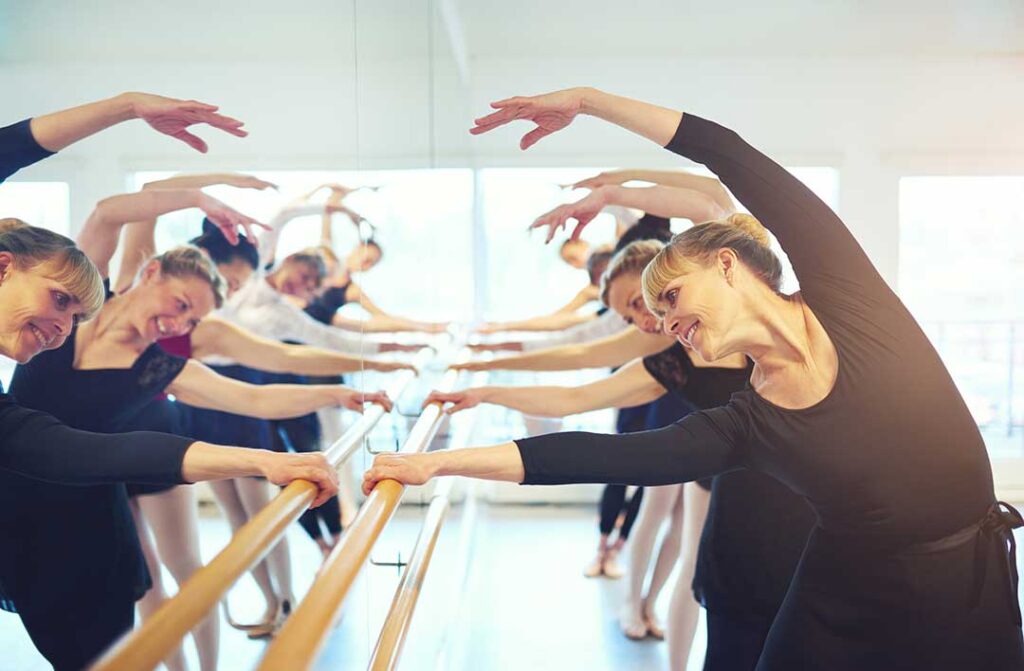
What role does stretching play in dance?
Stretching helps dancers develop usable range of motion, prepare the body for movement, and recover after activity. It is not simply a way to become more flexible. Good stretching supports alignment, balance, posture, joint control, and confidence during dance movements.
A dancer may need enough mobility to lift a leg, point the feet, bend through the knees, or move the spine comfortably. However, flexibility without strength and control can make movement less stable. The goal is not to force the body into extreme positions. The goal is to create the amount of mobility needed for safe, efficient technique.
Why do dancers stretch before class?
Before dance begins, the body benefits from gentle movement that gradually increases circulation and raises muscle temperature. Dynamic stretching is generally better suited to this part of class than long, motionless stretches.
Dynamic stretching uses controlled movement through a comfortable range. Examples include:
- Slow leg swings with support
- Walking lunges
- Arm circles
- Gentle pliés
- Controlled ankle movements
- Torso rotations
- Rising and lowering through the feet
These movements help rehearse the actions that dance requires. A warm-up should feel active and controlled rather than exhausting. Dancers should not bounce aggressively, force a joint, or stretch until there is sharp pain.
A brief warm-up is especially useful during colder months in Quincy, IL, when muscles may feel stiff after time spent indoors or after traveling in a cool car. Indoor temperature, clothing, and how long a dancer has been sitting can all affect how ready the body feels.
Is static stretching useful for dancers?
Yes, but timing matters. Static stretching involves holding a position for a period of time, such as sitting in a straddle or holding a calf stretch against a wall. It can help improve flexibility when practiced consistently and gently.
Long static stretches immediately before demanding jumps, fast choreography, or strength-based movement may temporarily reduce the feeling of power or responsiveness for some dancers. For that reason, longer holds are often more appropriate after class, during a separate flexibility session, or when the body is already thoroughly warm.
A useful static stretch should create mild tension, not pain. Breathing should remain steady, and the dancer should be able to release the position without sudden movement. Flexibility tends to improve through regular practice over time rather than through one intense stretching session.
How long should a dancer hold a stretch?
There is no single correct hold time for every dancer, but a gentle static stretch is commonly held for about 15 to 30 seconds. Beginners may start with shorter periods, while experienced dancers may use longer holds when appropriate.
The quality of the position matters more than counting seconds. A dancer should maintain steady breathing, avoid collapsing into poor alignment, and stop before discomfort becomes intense. Repeating a moderate stretch is usually safer and more productive than forcing one deep position.
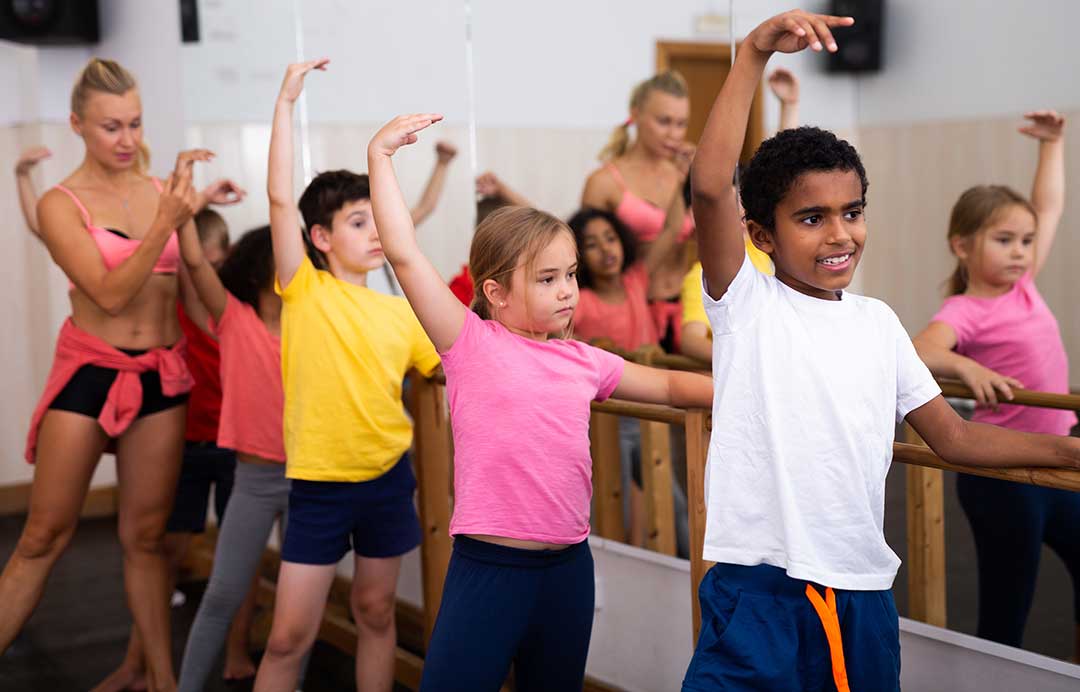
Children and young dancers need particular care. Growing bodies may have different levels of flexibility from one side to the other, and a child may not accurately describe the difference between normal stretching tension and pain. Adult supervision and clear technique cues can help prevent pushing beyond a safe range.
Can stretching prevent dance injuries?
Stretching may contribute to healthy movement, but it cannot prevent every injury. Dance injuries can also result from fatigue, sudden increases in training, poor landing mechanics, inadequate strength, improper footwear, hard flooring, or repeating the same movement too often.
A well-rounded approach includes:
- Gradual warm-up before vigorous movement
- Strength training appropriate to age and experience
- Rest between demanding sessions
- Adequate food, water, and sleep
- Attention to pain and unusual fatigue
- Proper technique and controlled landings
- Gradual progression of flexibility goals
Stretching should not be used to “stretch out” an injury. Pain that is sharp, persistent, worsening, or associated with swelling, weakness, numbness, or altered movement deserves attention from a qualified health professional.
Why is flexibility different from mobility?
Flexibility describes how far a muscle or group of tissues can lengthen. Mobility is broader: it includes the ability to move a joint through a range with strength, coordination, and control.
For example, a dancer may be able to reach a high leg position passively while seated but struggle to lift the leg to the same height independently. The difference is often related to active mobility and strength rather than a lack of flexibility.
Dance training benefits from both. A dancer needs enough flexibility to access a position and enough strength to control the movement in and out of it. Exercises such as slow développés, controlled leg lifts, relevés, and carefully aligned lunges can help connect range of motion with usable strength.
Should dancers stretch through pain?
No. Mild tension, warmth, or a gentle pulling sensation can be normal. Sharp pain, pinching, burning, cramping, or pain concentrated in a joint is a signal to stop or reduce the range.
A safe response is to ease out of the position, check alignment, and try a smaller range after resting. Continuing to push through pain can irritate muscles, tendons, ligaments, or joint structures.
Dancers should also be cautious about comparing themselves with classmates. Natural flexibility varies because of body structure, training history, age, previous injuries, and daily activity. A position that feels comfortable for one dancer may be inappropriate for another.
How should stretching change for different dance ages and levels?
Young beginners generally benefit from playful movement, basic body awareness, and gentle range-of-motion exercises rather than intense flexibility training. Instruction should emphasize control, balance, and coordination.
Teen and adult dancers may pursue more specific flexibility goals, but those goals should still be matched with strength. A dancer returning after time away, illness, or injury should rebuild gradually instead of immediately repeating a previous routine.
Older adult dancers may notice that recovery takes longer or that stiffness is more pronounced after sitting. A longer warm-up, moderate intensity, and consistent mobility work can help. Regular movement throughout the day may be as useful as a single stretching session.
What is a practical stretching routine at home?
A simple routine can take 10 to 15 minutes when the body is already warm:
1. Walk or move gently for several minutes.
2. Circle the ankles, knees, hips, shoulders, and wrists without forcing the joints.
3. Perform controlled lunges and pliés.
4. Add gentle leg swings while holding a stable surface.
5. Hold comfortable calf, hip, hamstring, and inner-thigh stretches.
6. Finish with relaxed breathing and easy movement.
A clear floor area, supportive clothing, and a stable surface can make home practice safer. Hardwood, tile, or other firm flooring may require additional attention to slipping, impact, and pressure on the knees. Stretching on a cold floor without warming up can make the body feel less prepared.
The most useful routine is one that can be repeated consistently, respects individual limits, and supports the actual demands of dance. Flexibility is only one part of strong technique; control, coordination, recovery, and body awareness matter just as much.